The median home price in Big Sky sits just over $2.3 million as of late 2026, but that single number hides a sharply split market. Condos sell months faster than single-family houses, and the property type you choose dictates your costs, your timeline, and your bargaining power.
A real estate purchase here requires deciding between ski-in access and valley-floor services, understanding private club requirements, and working through a Montana-specific transaction process. The sections below cover how to price an offer, where to look, and what to expect from ownership costs.
The condo median fell 16.9% over the 90 days ending October 31, 2026, and condos sell months faster than houses, which helps whenever you resell. If you need a single-family home, sellers there have waited even longer, so you have real room to negotiate. That segment's numbers rest on a small sample of sales, so treat them as a direction rather than a guarantee.
You are planning to buy in Big Sky and deciding between a condo and a house, between ski access and town services, and how hard to push on price in a slower market.
Big Sky's headline median rose 5.1% to $2,348,367 only because the mix of sales shifted. Within each type, prices fell: single-family dropped on just 23 sales and condos fell the most of the two segments.
With zero homes selling above list and 6.1 months of supply, buyers hold a strong position in both segments. The real decision is between a condo that resells faster (138 days) and a house whose seller has likely waited far longer (249 days). You're not chasing a rising market, and you have time to compare your options.
More expensive single-family homes made up a larger share of this window's sales, which lifted the blended median even though both condo and house medians dropped. You can ignore the headline number and price the specific type you're buying. Big Sky's overall median went up even though both segments fell in the same 90 days.
The data doesn't report a sale-to-list ratio for this window, so it can't tell you how far below asking homes are closing. You'll need to get that from recent comparable sales on the specific listings you're considering.
Currently, 6.1 months of supply sits in buyer-leaning territory, and not one sale closed above list. You can ask for price reductions, credits, or longer inspection and financing periods without competing against multiple offers. Not one of the 73 Big Sky homes sold in the 90 days ending October 31, 2026, closed above its asking price.
This advantage isn't uniform across every property. A well-priced ski-in condo or a rare listing can still draw a fast, full-price offer, so check each property's days on market and price history before assuming a discount.
Here's a snapshot of the Big Sky market based on the 90 days ending October 31, 2026.
The Big Sky market splits sharply by property type, and your choice dictates your entry price and how easily you can sell later. Condos represent the bulk of the transactions, offering a lower price point and faster turnover. Single-family homes offer more space and privacy, but they come with a much longer timeline both when buying and when selling. The choice comes down to your budget, your need for square footage, and your tolerance for carrying costs.
Condos are the larger, more liquid part of the market and the lower entry point, with a median sale price of $1,409,117 based on 49 recent sales. The faster exit cuts carrying costs when you resell. Big Sky condos sold nearly four months faster than houses in the 90 days ending October 31, 2026, sitting for a median of 138 days versus 249 for houses.
HOA dues, special assessments, and rental-program rules come with the territory. Those costs don't appear in the price data, so ask the HOA for current dues, the reserve study, and any planned assessments before you write an offer.
Houses fell in price and sit the longest on the market. Sellers who've carried a property for the better part of a year are often more open to price cuts and concessions. The single-family median dropped 14.1% year over year, based on only 23 sales. The typical Big Sky house took about eight months to sell.
With only 23 sales behind these numbers, a few large estates can swing the median considerably. That same drop is a direction, not a discount you can count on for any one house. That slow sale time will apply when you eventually resell.
At the median price per square foot, a 2,000-square-foot house would run about $2,074,000, while a 2,000-square-foot condo costs about $1,778,000, a gap of roughly $296,000. If square footage matters more than land and privacy, a larger condo can get you more space per dollar.
These are medians across different sizes, locations, and ages. A ski-in condo can cost more per square foot than a house in the canyon, so compare price per square foot within the same area and property type, never across them.
Vacant land purchases involve architectural review boards in many HOAs and clubs, well and septic permitting, and mountain construction timelines. You'll need to account for a short building season and strict design guidelines.
Get written builder bids, confirm well and septic permitting with the county, and ask the HOA or club for its design-review timeline before you buy a lot.
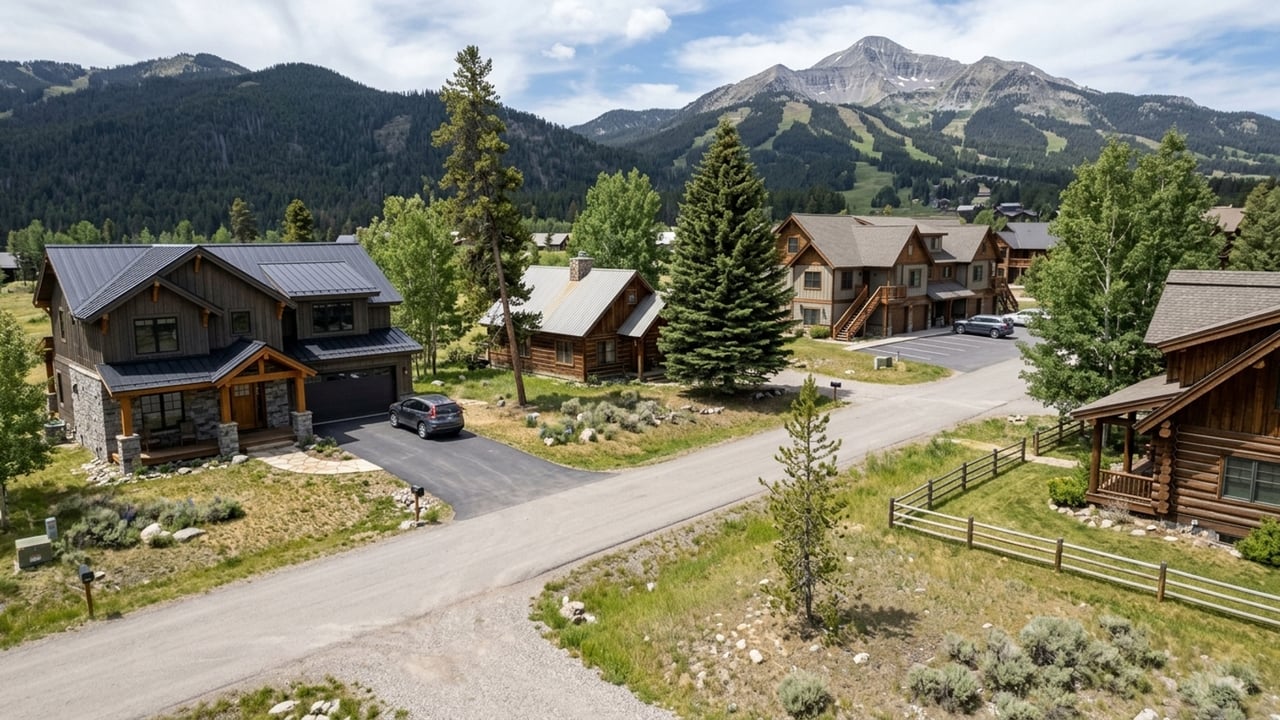
Mountain neighborhoods prioritize direct lift access and high-elevation views. These neighborhoods put you right on the slopes, but they trade away quick access to groceries and year-round town services. You'll pay higher HOA dues and, in some communities, mandatory private club initiation fees. The areas below represent the primary options for on-mountain living.
Mountain Village is the base area of Big Sky Resort, dominated by condos and lodging-style properties. It sits at a base elevation of about 7,400 feet and provides the most direct ski access without requiring a private club membership. This is the default starting point for buyers who want to walk or ski to the lifts.
Many units come with rental-program or condo-hotel rules and higher dues, and winter parking and access can be tight. Ask the HOA for current dues and any rental restrictions before you go further.
Located on the north side of Lone Mountain, Moonlight Basin is quieter, with homes and condos tied to resort terrain. Per the club's membership materials, joining offers ski access, golf, and lodge privileges, though property ownership is not currently a strict membership requirement.
It's farther from Town Center groceries and services, and any club or association dues add to carrying costs. Ask for the current dues schedule and whether membership is required or optional.
This is a private club community offering private ski-in/ski-out access to Big Sky Resort's terrain. Owners must hold at least a Social membership or Signature Golf tier, with membership generally tied to property ownership.
Initiation fees and annual dues come on top of the purchase price and can affect resale. Ask the club for the current fee schedule and transfer rules in writing.
The Yellowstone Club is a private ski and golf club sitting at the top of the Big Sky price range. Membership is by invitation only, and property ownership inside the club is required to join. The club is not open to the public and doesn't publish membership pricing officially, though reporting cites initiation fees in the hundreds of thousands plus annual dues.
You can't buy here without club approval and membership costs, and the resale buyer pool is limited to people who will also join. Confirm current initiation and dues directly with the club.
Buyers who want to walk to dinner, pick up groceries quickly, or live in Big Sky year-round often prefer the valley floor. These neighborhoods offer established infrastructure and sit at a lower elevation than the resort base.
These neighborhoods trade away ski-in/ski-out convenience. You'll drive or ride the shuttle to the lifts during winter, but you gain immediate access to the commercial core and avoid the steep, snowy canyon drives required to reach the upper mountain.
Meadow Village is the valley-floor area with established neighborhoods, offering a mix of condos, townhomes, and single-family homes. It sits well below Mountain Village and provides quick access to Town Center, making it a practical fit for the year-round resident without a club membership.
You'll drive or take a shuttle to the lifts every ski day. Check the current shuttle routes and how far each property is from a stop.
Town Center serves as Big Sky's commercial core, featuring walkable condos and townhomes above or near shops and restaurants. If you want to leave your car parked and walk to dining and entertainment, this is the area to target.
The busiest part of Big Sky brings event noise, foot traffic, and ongoing construction nearby. Visit on a busy summer or winter weekend before committing.
Homes and cabins along the Gallatin River and US-191 often feature more land and less HOA structure than the mountain or meadow areas. US-191 is the main highway serving Big Sky, providing a direct route out of the immediate resort zone.
Highway traffic, river-adjacent flood exposure, and well-and-septic systems come with many canyon properties. Check the FEMA flood map for the parcel and budget for well and septic inspections.
Your search starts with answering a few practical questions. Do you need to ski from your door, or is a short drive or shuttle to the lifts fine? If ski access matters most, read the ski-access neighborhood profiles. If year-round services matter more, focus on the town-services areas. Next, decide if you're willing to join a private club, with its initiation fee and annual dues. If not, skip the private clubs and focus on Mountain Village, Meadow Village, and Town Center. If yes, review club dues carefully.
Then consider your timeline and space needs. Will you resell within a few years, or do you need more square footage? Faster resale points to a condo, while space and bargaining power point to a single-family home. Finally, ask yourself whether you'll rent the home out when you're not using it. If so, read up on short-term rental rules and HOA covenants before you shortlist anything.
If you want the lowest entry price and the fastest resale, start with condos, beginning in Mountain Village. For the most living space per dollar, look at larger condos. For year-round services and walkability without a private-club membership, start with Meadow Village or Town Center. For the most negotiating room on a house, target single-family listings well past the median days on market. If you're still weighing mountain towns, compare Big Sky with another ski market to see which fits your goals.
The purchase price is only the beginning of your financial commitment in a resort town. Ongoing carrying costs can be substantial, and they vary depending on the specific neighborhood and property type you select. From mandatory club dues to local resort taxes, these expenses affect your monthly budget and your potential rental income. Reviewing them before closing prevents surprises afterwards.
Nearly every condo and many single-family homes in Big Sky belong to an HOA. Dues typically cover exterior maintenance, snow removal, and common amenities, while private club dues grant access to golf courses, private lodges, and uncrowded ski terrain.
Dues can rise and special assessments can land after you close. Ask the HOA for current dues, the reserve study, and the minutes from the last two years of meetings. For private clubs, get the current initiation fee, annual dues, and membership transfer rules in writing.
The Big Sky Resort Area District administers a 4% resort tax, which includes a 3% base luxury tax and a 1% infrastructure tax. This is collected on luxury goods and services sold within the district, and it raises the everyday costs of living and dining out.
If you plan to rent the property, confirm with the Resort Area District whether lodging rentals collect resort tax, and factor it into your rental pricing.
Your property tax bill depends on which county the parcel sits in and its specific mill levy. Because Big Sky crosses the county line, neighbors can have different tax rates depending on exactly where their property lines fall.
The seller's current tax bill may not reflect a reappraisal after your purchase. Look up the parcel on the Montana Cadastral site to confirm which county it's in and ask the county treasurer for the current levy.
Renting out your home to vacationers requires compliance with local regulations. Rules come from county regulations and, often more strictly, from HOA covenants.
A covenant can ban or cap rentals even where the county allows them. Read the covenants and confirm current county rules before counting on short-term rental income.
Mountain and river-adjacent properties raise specific insurance questions. Wildfire risk in the timbered areas and flood risk near the Gallatin River can complicate your ability to secure affordable coverage.
Coverage availability and price vary by parcel. Check the FEMA flood map for any parcel near the Gallatin River or its forks, and get a written insurance quote, including wildfire coverage, before your contingencies expire.
Montana real estate transactions involve specific state laws and mountain-town logistics that differ from other markets. The state doesn't disclose sale prices to the public, which changes how you determine a property's value. You'll also need to account for high-altitude inspections, strict HOA document reviews, and jumbo loan requirements. Following these steps protects your earnest money and ensures you understand exactly what you're buying.
Nearly every Big Sky purchase will exceed the conforming loan limit. For 2026, the FHFA conforming loan limit for a one-unit property in Gallatin County is $832,750, which means you'll likely need jumbo underwriting or proof of funds for a cash purchase.
Jumbo lenders often want larger down payments and cash reserves, and some restrict condo-hotel or rental-program units. Ask your lender whether it finances the specific property type before you shop.
Montana is a non-disclosure state for real estate, meaning sale prices are not disclosed to the public or made part of the public record. Because you can't look up what a neighbor paid in county records, comparable sales must come through the MLS via an agent.
Online estimates are weaker here because of missing price data. Ask for list-price history, days on market, and the final sale prices of comparables before you set a number.
In Big Sky, the documents can rule a property in or out quickly. You'll need to review rental limits, design review guidelines, dues, pending assessments, and membership transfer rules before moving forward.
Document review windows in a contract are short, so request the full package as soon as your offer is accepted.
With months of supply sitting on the market, you can ask for a price reduction, seller credits, or longer contingency periods, especially on listings well past the median days on market. Single-family homes in particular are taking roughly eight months to sell, giving you room to negotiate.
Fresh, well-priced listings may not negotiate much. Your bargaining power grows with a listing's days on market, so check each one's history first.
Beyond a general inspection, mountain homes call for extra checks: roof age and snow-load rating, well water and septic testing, radon testing, and heating system evaluations.
Snow cover from late fall to spring can hide roof and grading problems. Ask the inspector about anything snow cover prevented them from seeing and whether a follow-up visit is needed.
The closing process involves title insurance and escrow, handled by a local title company. Montana doesn't charge a real estate transfer tax, as the state constitution prohibits local governments from imposing a tax on the sale or transfer of real property.
Club transfer fees, HOA capital contributions, and prorated dues can still add meaningful closing costs. Ask for an estimated settlement statement early in the process.
Hiring a local agent is a practical requirement in a non-disclosure state where public price data doesn't exist. You need someone who can pull MLS comparables and explain the exact days on market for the properties you want to tour. When interviewing agents, ask about their experience with club resales, condo rental programs, and new-construction contracts. If you're ready to start looking at properties or just want to discuss your timeline, contact Amelia Real Estate Co. to review the current inventory.
It depends on whether you want a year-round city market or a resort market dominated by condos and second homes. According to a 2026 report, the median price of a single-family home in Bozeman has risen to nearly $800,000, which is lower than the Big Sky median listed above. Big Sky properties also take longer to sell, so you should weigh the lower entry price of Bozeman against the direct ski access of Big Sky.
Yes, Big Sky home values rank among the highest in the state. The all-homes median listed above far exceeds the statewide median home sale price. Condos offer a lower-cost route into the market, but single-family homes and private club properties drive the area's high overall pricing.
Tour in both the snow season and the shoulder season. Because houses take months to sell, listings carry across seasons, giving you time to evaluate winter access, parking, and snow load, as well as summer conditions. Check the resort's current season calendar to plan your trips around peak visitation weeks.
Big Sky straddles the Gallatin and Madison county line. Which county a parcel sits in determines its property tax levy and which permitting office you deal with for construction. Check the parcel on the Montana Cadastral site to confirm its county.
No, Big Sky is an unincorporated community with no municipal government of its own. Services and the resort tax are handled through the Big Sky Resort Area District and the joint county commissions. Rules come from the counties and HOAs, not a city council.
Big Sky is about 45 miles by road from Bozeman and the Bozeman Yellowstone International Airport via US-191. The drive typically takes about an hour, though winter canyon driving conditions can lengthen trips considerably.
Big Sky is about 45 to 50 miles from Yellowstone National Park's west entrance. The drive follows US-191 south through the Gallatin Canyon directly to West Yellowstone.
Big Sky Resort is on the Ikon Pass. For the Winter 2026-27 season, the full Ikon Pass includes seven days of access with no blackout dates, while the Base Pass offers five days with restricted dates. Private clubs such as the Yellowstone Club and Spanish Peaks Mountain Club run separate access arrangements, so verify lift access if you buy in those communities.
Related guides: Big Sky, MT ZIP codes, Selling a home in Big Sky, Pros and cons of living in Big Sky.
Explore every Big Sky neighborhood guide:
Thinking about Bozeman too? See the Bozeman neighborhood guide.
Buying a second home or a luxury property? See how Amelia Turbyfill works as a luxury real estate agent.
To talk through which part of Big Sky fits you, reach Amelia Turbyfill at 406-599-7711 or through the contact page.
2,445 people live in Big Sky, where the median age is 38.4 and the average individual income is $88,550. Data provided by the U.S. Census Bureau.
Total Population
Median Age
Population Density Population Density This is the number of people per square mile in a neighborhood.
Average individual Income
There's plenty to do around Big Sky, including shopping, dining, nightlife, parks, and more. Data provided by Walk Score and Yelp.
Explore popular things to do in the area, including Montana Dinner Yurt, Shedhorn Grill, and Backcast.
| Name | Category | Distance | Reviews |
Ratings by
Yelp
|
|---|---|---|---|---|
| Dining · $$$ | 1.26 miles | 18 reviews | 4.8/5 stars | |
| Dining | 1.26 miles | 0 reviews | 0/5 stars | |
| Dining | 1.27 miles | 6 reviews | 4.2/5 stars | |
| Dining | 1.27 miles | 37 reviews | 4.5/5 stars | |
| Dining | 1.27 miles | 6 reviews | 4.7/5 stars | |
| Dining · $$ | 1.42 miles | 124 reviews | 4/5 stars | |
| Dining · $$ | 1.43 miles | 92 reviews | 4.3/5 stars | |
| Dining · $$ | 1.44 miles | 292 reviews | 3.8/5 stars | |
| Dining | 1.49 miles | 0 reviews | 0/5 stars | |
| Shopping | 0.78 miles | 0 reviews | 0/5 stars | |
| Shopping | 1.43 miles | 2 reviews | 5/5 stars | |
| Active | 1.27 miles | 0 reviews | 0/5 stars | |
| Active | 1.4 miles | 2 reviews | 5/5 stars | |
| Active | 1.41 miles | 0 reviews | 0/5 stars | |
| Active | 1.43 miles | 36 reviews | 4.9/5 stars | |
| Active | 1.43 miles | 54 reviews | 4.2/5 stars | |
| Nightlife | 1.27 miles | 7 reviews | 3/5 stars | |
| Nightlife | 1.27 miles | 7 reviews | 3.7/5 stars | |
| Nightlife | 1.46 miles | 29 reviews | 3.3/5 stars | |
| Nightlife | 1.46 miles | 4 reviews | 3/5 stars | |
| Beauty | 1.27 miles | 0 reviews | 0/5 stars | |
| Beauty | 1.33 miles | 0 reviews | 0/5 stars | |
| Beauty | 1.35 miles | 0 reviews | 0/5 stars | |
| Beauty | 1.42 miles | 0 reviews | 0/5 stars | |
|
|
||||
|
|
||||
|
|
||||
|
|
||||
|
|
||||
|
|
Big Sky has 1,087 households, with an average household size of 2.13. Data provided by the U.S. Census Bureau. Here’s what the people living in Big Sky do for work — and how long it takes them to get there. Data provided by the U.S. Census Bureau. 2,445 people call Big Sky home. The population density is 20 and the largest age group is Data provided by the U.S. Census Bureau.
Total Population
Population Density Population Density This is the number of people per square mile in a neighborhood.
Median Age
Men vs Women
Population by Age Group
0-9 Years
10-17 Years
18-24 Years
25-64 Years
65-74 Years
75+ Years
Education Level
Total Households
Average Household Size
Average individual Income
Households with Children
With Children:
Without Children:
Marital Status
Blue vs White Collar Workers
Blue Collar:
White Collar: