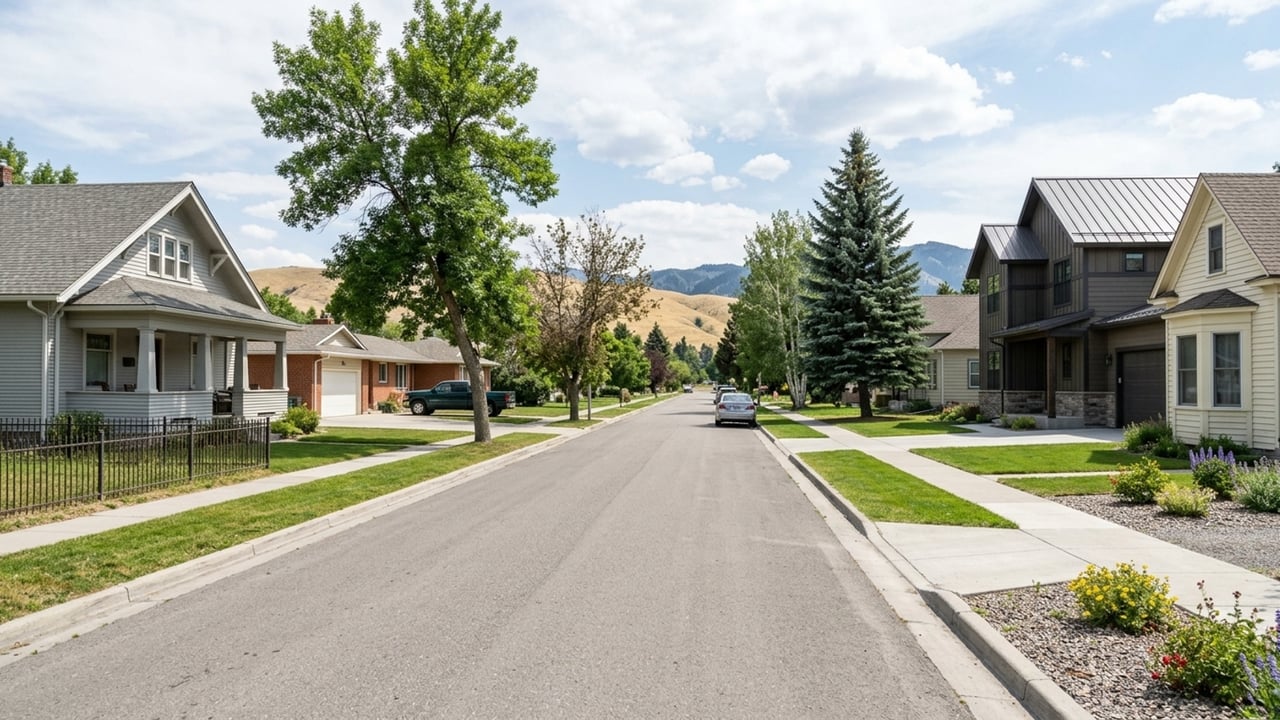
The median home price in Bozeman, MT, is around $664,000, and the market buyers are stepping into today looks nothing like it did a few years ago. Inventory is up, homes are sitting longer, and the bidding wars that made every offer a gamble have mostly gone quiet.
For buyers shopping in late 2026, that shift creates real room to negotiate on price and terms, particularly if you're open to attached housing. Your negotiating leverage and the ownership costs beyond the purchase price determine how far your budget stretches in Gallatin County.
If you're buying in Bozeman now, condos give you the most room to negotiate. The condo median fell far more than any other type over the past year. If you need a yard or a detached home, single-family houses held their value and sell faster, so expect less give on price. Townhouses sit in between.
You're planning to buy in Bozeman and deciding which type of home to target and how hard you can push on price.
Bozeman's price slowdown is a condo story more than a house story. Condos take a median 82 days to sell versus 52 for single-family homes, whose median slipped only 5.2%, and condo sellers are accepting lower prices. Buyers have real negotiating power on condos. Much less on houses. Condo sellers are waiting longer, which gives you time to evaluate your options without the pressure of losing a deal overnight.
House buyers face a market that cooled only slightly. A median reflects the mix of homes that sold recently, not a uniform loss in value across every property. If fewer high-end condos closed this quarter, the median drops even if individual unit values held steady. For any specific unit, you need building-level comparable sales, not a city-wide figure. The full breakdown of prices and supply is in the At a Glance list below.
Start with the basics. Do you need a private yard or a detached home? If yes, go straight to the single-family homes section and expect the least negotiating room. If not, the condo and townhouse profiles show where your dollar stretches further.
Then consider whether negotiating power matters more to you than square footage or land. If you want the most room under about $500,000, start with condos, then read the section on how to negotiate. If you're financing with an FHA loan or counting on rental income, review the pre-approval and short-term rental sections before you shortlist anything. And if this will be a second home rather than a primary residence, read the property taxes section carefully. Montana now taxes them differently, and the difference is significant.
The property type you choose dictates your entry price, your monthly carrying costs, and how much room you hold at the negotiating table. That trade-off is especially visible in Bozeman right now. The market is segmented, with distinct levels of buyer advantage depending on what you want to purchase.
A Bozeman condo costs about $72 less per square foot than a house. That gap means you can either get more living space for the same budget or the same space for less money upfront. Condos are the cheapest entry point into the city, and they're the segment where sellers are currently the most motivated to deal.
The purchase price is only half the comparison, though. HOA dues and building rules change the real monthly cost of owning a condo, and the same falling values that give you room to negotiate today will also affect your resale if the decline continues. HOA dues, special assessments, FHA approval status, and short-term rental limits vary building by building. Before you make an offer, ask the HOA for current dues, the reserve study, and any planned assessments.
Townhouses cost about the same per square foot as condos but held their value much more like houses over the past year, which makes them a possible middle path for buyers who want condo-level pricing without the steeper drop in median value. The townhouse median declined far less than condos recently, based on 21 sales in the latest 90-day window.
One caution: with that sample size, a handful of closings could shift the picture entirely, and there are simply few units available at any given time. You're also not escaping HOA dues. Townhouses usually carry them too, so ask for the same documents you'd request on a condo.
Houses are the only property type in Bozeman with less than four months of supply. Detached homes, yards, and room to expand carry the highest entry price; prices have barely softened compared to attached units, and new construction on the city's edge competes directly with older in-town homes.
You pay the most and hold the least negotiating power here. Well-priced houses still move faster than other types, so the lowball approach that works on a condo that's been sitting for 80 days can cost you a house entirely. Expect to pay closer to asking price to secure a detached property.
A successful offer requires understanding how long homes are sitting and what sellers are willing to concede. You can use current conditions to negotiate a lower price, better terms, or reduced cash to close.
For illustration only: on a $500,000 asking price, a 2% seller credit equals $10,000 that you can apply toward closing costs or a permanent rate buydown. Amelia Turbyfill Real Estate Co can pull MLS comparable sales for a specific building or street to help you determine the right starting point for your offer.
Compare a listing's days on market with the city-wide median for its property type. A listing that's sat well past that median signals a seller who may be more open to adjusting the price or offering favorable terms. Current medians are in the At a Glance list below.
Days on market can be reset by relisting a property. Ask your agent for the full listing history, including prior price cuts and withdrawn listings, so you know exactly how long the seller has been trying to close.
In the 90 days ending September 30, 2026, not a single Bozeman home of any type sold above its list price. Escalation clauses, waived inspections, and over-asking offers are unnecessary right now. Keep your inspection and financing contingencies in place.
MLS data does not report how far below list price homes sold, so there's no standard discount to apply across the board. Base your offer on comparable sales in the immediate area, not a rule of thumb.
In a slower market, a credit toward closing costs or an interest rate buydown can be worth more than an equal price cut. It lowers the cash you need at the closing table or reduces your monthly payment for the life of the loan.
Lenders cap how much a seller can contribute toward your costs, and that limit depends on your specific loan type and down payment. Confirm the exact ceiling with your lender before writing the offer so you don't ask for more than you're allowed to use.
Montana is a non-disclosure state, so what a Bozeman home sold for usually isn't in public records. The Realty Transfer Certificate filed with every real estate sale is held confidential by the county, meaning county deeds and many free real estate sites can't show you what a neighbor's home sold for. Accurate comparable sales data comes directly from the Multiple Listing Service.
Online value estimates are weaker without public sale prices feeding their algorithms. Treat any automated estimate as a rough starting point and rely on your agent to pull real, recent sales data.
A realistic budget for a home in Gallatin County looks past the list price to the ongoing costs of ownership. Property taxes, insurance, and maintenance add more to your monthly payment than the purchase price alone suggests, particularly for buyers relocating from states with lower tax rates or different closing customs.
Montana's homestead classification and non-disclosure rules differ from most states, so confirming how the county will classify your purchase before you are under contract prevents surprises when the loan estimate arrives.
Montana now taxes homes differently depending on whether you live in them full time. Beginning in tax year 2026, primary residences get a homestead rate of 0.76%, while second homes and short-term rentals pay a flat 1.90% rate on their full value. The classification depends entirely on how you use the property.
A second home or non-owner-occupied rental may face a higher rate than the seller paid as a full-time resident, so the seller's tax bill may not be yours. Ask the Gallatin County Treasurer for the parcel's current bill and verify how the county will classify it after closing.
Montana doesn't charge a real estate transfer tax, which removes a significant closing cost that buyers from other states might expect. It's customary locally for the seller to pay for the owner's title insurance policy, while the buyer pays for the lender's title insurance policy.
Lender fees, prepaid property taxes, and homeowners insurance still add up quickly. Request a Loan Estimate early and compare options across multiple lenders.
HOA dues vary widely by building and aren't included in standard market summaries. Confirm exactly what the dues cover: snow removal, exterior maintenance, water and sewer, master insurance policies. The list matters.
A low price per square foot can be wiped out by high monthly dues or a looming special assessment. Get the HOA budget, the latest reserve study, and recent board minutes before your contract deadlines pass.
Bozeman charges impact fees on new residential construction to fund streets, water, wastewater, and fire services. These fees are usually built into a new home's price, which partly explains why new builds carry a premium over existing housing.
Fees can change with each city schedule update. If you're building a custom home or buying pre-construction, ask the builder whether all impact fees are included in the contract price or if you'll be billed separately.
The figures on this page cover the city of Bozeman as a whole. Nearby communities and specific subdivisions report their sales separately, so to understand pricing at the neighborhood level, you'll need to look at local developments directly. You can compare options by reviewing a guide to Bozeman neighborhoods and new construction, or by exploring specific areas like the Triple Tree neighborhood.
Always ask for recent sales in the specific subdivision or building you're targeting. Confirm whether a property sits inside or outside Bozeman city limits too. That boundary affects your utility providers, your property taxes, and the rules governing rental properties.
The process of searching, touring, and closing follows standard real estate practices, but a few steps require specific attention in Gallatin County. Handling these local details early prevents delays during your inspection and financing contingencies.
If you need help finding the right property or pulling accurate comparable sales, reach out to a Bozeman real estate agent. If you need to sell your current home first, review the selling timeline in Bozeman so you can coordinate your closing dates.
Pre-approval for a detached house doesn't guarantee you can secure financing for a specific condo. FHA and some conventional loans require the condominium project itself to meet lender standards. You can check a building's FHA status on HUD's public lookup tool and verify warrantability with your loan officer.
If a building isn't FHA-approved or is considered non-warrantable, your loan options shrink, and some buyers can't purchase there at all. Check the building's status before you write an offer on a unit.
Radon is a known concern across Montana, including Gallatin County. The Montana Department of Environmental Quality recommends testing homes for radon, so add a specific radon test to your inspection period.
A radon test needs a set number of days to run its continuous monitoring. Make sure your inspection deadline leaves enough time to get results back and request a mitigation quote if levels come back high.
Under City of Bozeman ordinance, short-term rentals are classified by type, dictating whether you can rent out a room, an accessory dwelling unit, or a primary residence while you're away. Hosts must go through the city's permitting process, and HOA covenants can add their own restrictions on top of city code.
Rules can change, and covenants can be stricter than city regulations. Confirm eligibility directly with the city and read the HOA covenants yourself rather than relying on a listing's rental claims.
School zoning can shift as the city grows, so check addresses on the Bozeman Public Schools official boundary map.
Boundaries can change, and a listing's school information isn't guaranteed. Verify the address with the district before you write an offer.
It depends on your timeline, your financing, and the property type you want to purchase. The market currently has 4.4 months of supply across all homes, which signals a more balanced environment than in recent years. Weigh your own budget and review the property type section to see where buyers have the most room to negotiate.
Market data tracks median prices rather than averages, as medians are less skewed by a few very high sales. The median sale price for all homes in Bozeman is approximately $664,134. Detached homes cost more than attached units, so check the At a Glance list for the exact breakdown of single-family, condo, and townhouse medians.
Yes, the median sale price for all homes fell 13.6% year over year. That drop isn't uniform across all neighborhoods or building types. Medians reflect the mix of homes that sold during that window, not a blanket loss in value. Review the property market section to see how condos and houses experienced different shifts.
Bozeman offers extensive outdoor access and a convenient international airport, but buyers should prepare for cold winters and roughly 91.3 inches of annual snowfall. On the housing side, the median price sits at about $362 per square foot, which is higher than many other Montana cities. You can learn more by reading a guide on moving to Bozeman.
The Montana Department of Labor & Industry found that Gallatin County had the fastest-growing labor force in the state from 2012 to 2017, supported by tech sector growth, making technology a major driver of employment in the area.
Yes, Bozeman Yellowstone International Airport (BZN) serves the area. It provides customs services for international flights and connects the region to major hubs across the country.
Big Sky is approximately 45 miles south of Bozeman via US Highway 191 through Gallatin Canyon. The drive typically takes about 50 to 60 minutes, though winter weather conditions on the canyon road can lengthen your travel time.
The North Entrance at Gardiner is about 78 miles away, taking roughly 1 hour and 23 minutes via I-90 East and US-89 South. The West Entrance at West Yellowstone is approximately 91 miles away, taking about 1 hour and 45 minutes via US-191 South, though seasonal road closures apply inside the park.
Related guides: Choose a buyer's agent in Bozeman, Pros and cons of living in Bozeman, Bozeman, MT ZIP codes, Bozeman, MT housing market.
56,114 people live in Bozeman, where the median age is 28.9 and the average individual income is $52,507. Data provided by the U.S. Census Bureau.
Total Population
Median Age
Population Density Population Density This is the number of people per square mile in a neighborhood.
Average individual Income
There's plenty to do around Bozeman, including shopping, dining, nightlife, parks, and more. Data provided by Walk Score and Yelp.
Explore popular things to do in the area, including Black Pearl Tea House, Max Muscle, and Bozeman Asian Market.
| Name | Category | Distance | Reviews |
Ratings by
Yelp
|
|---|---|---|---|---|
| Dining | 0.26 miles | 6 reviews | 4/5 stars | |
| Dining | 0.27 miles | 0 reviews | 0/5 stars | |
| Dining | 0.27 miles | 0 reviews | 0/5 stars | |
| Dining | 0.29 miles | 0 reviews | 0/5 stars | |
| Dining · $$ | 0.3 miles | 681 reviews | 4/5 stars | |
| Dining | 0.32 miles | 106 reviews | 4.3/5 stars | |
| Dining · $ | 0.34 miles | 34 reviews | 2.3/5 stars | |
| Dining | 0.37 miles | 4 reviews | 4/5 stars | |
| Dining | 0.4 miles | 63 reviews | 2.6/5 stars | |
| Dining · $ | 0.41 miles | 138 reviews | 1.8/5 stars | |
| Shopping | 0.38 miles | 12 reviews | 2.8/5 stars | |
| Active | 0.25 miles | 0 reviews | 0/5 stars | |
| Active | 0.28 miles | 0 reviews | 0/5 stars | |
| Active | 0.34 miles | 0 reviews | 0/5 stars | |
| Active | 0.35 miles | 0 reviews | 0/5 stars | |
| Active | 0.37 miles | 30 reviews | 5/5 stars | |
| Active | 0.38 miles | 0 reviews | 0/5 stars | |
| Active | 0.41 miles | 0 reviews | 0/5 stars | |
| Beauty | 0.27 miles | 9 reviews | 5/5 stars | |
| Beauty | 0.35 miles | 51 reviews | 3.1/5 stars | |
| Beauty | 0.4 miles | 1 review | 5/5 stars | |
| Beauty | 0.41 miles | 0 reviews | 0/5 stars | |
| Beauty | 0.42 miles | 0 reviews | 0/5 stars | |
| Beauty | 0.42 miles | 0 reviews | 0/5 stars | |
|
|
||||
|
|
||||
|
|
||||
|
|
||||
|
|
||||
|
|
Bozeman has 23,970 households, with an average household size of 2.17. Data provided by the U.S. Census Bureau. Here’s what the people living in Bozeman do for work — and how long it takes them to get there. Data provided by the U.S. Census Bureau. 56,114 people call Bozeman home. The population density is 2,625 and the largest age group is Data provided by the U.S. Census Bureau.
Total Population
Population Density Population Density This is the number of people per square mile in a neighborhood.
Median Age
Men vs Women
Population by Age Group
0-9 Years
10-17 Years
18-24 Years
25-64 Years
65-74 Years
75+ Years
Education Level
Total Households
Average Household Size
Average individual Income
Households with Children
With Children:
Without Children:
Marital Status
Blue vs White Collar Workers
Blue Collar:
White Collar: