Healthy air is part of why you live in the mountains. In Salt Lake City, that means paying attention to radon and everyday indoor air quality in your condo. The good news: testing is simple, solutions are practical, and you can protect both your health and your property value with a clear plan.
Why radon and air quality matter
Your condo should feel like a retreat after a day on the slopes or in the city. Clean indoor air supports better sleep, easier breathing, and peace of mind for you, your guests, and your future buyer. In our high-alpine climate, buildings stay closed for long stretches, which can trap pollutants. A little attention to testing, filtration, and ventilation goes a long way.
Radon basics for condo living
What radon is and why it matters
Radon is a naturally occurring radioactive gas that can build up indoors and increase lung cancer risk. It is colorless and odorless, so the only way to know your level is to test. The U.S. EPA recommends fixing buildings at or above 4.0 pCi/L and considering reduction between 2 and 4 pCi/L per EPA guidance. Utah’s geology means elevated radon is common, so awareness is important even above ground level Utah Geological Survey overview.
How radon moves into buildings
Radon enters through soil-connected areas and gaps. In multi-unit buildings it can find paths through slabs, garage levels, utility chases, plumbing penetrations, and shared foundations. Ventilation rates and the stack effect can move air vertically, so upper floors are not automatically in the clear CDC overview.
Condo vs. single-family considerations
In a single-family home, testing and mitigation decisions are contained to one structure. In a condo, you share systems and common elements. That means:
- Testing should be unit specific, and building-level sampling may be needed for a full picture Utah DEQ testing basics.
- Mitigation can involve both your unit and common elements, which adds coordination with your HOA and property manager.
- Utah law limits an HOA’s ability to prohibit radon mitigation that follows industry standards, though reasonable design rules and proper permits still apply Utah HB0104.
How to test your condo for radon
Short-term vs. long-term tests
- Short-term tests run 2 to 7 days and give a fast read. They are great for screening and real estate timelines. Follow closed-house conditions for accuracy Utah DEQ instructions.
- Long-term tests run 90 days or more and provide a better average over seasons. Use them to confirm an initial result or to evaluate the effectiveness of a mitigation system Utah Geological Survey.
A practical sequence is to start with a short-term test. If results are near the action level, follow up with another short-term test or a long-term test to confirm before deciding on mitigation.
Unit-level and common-area testing
Test the lowest livable level of your unit. Ground-floor and below-grade units deserve priority, but any floor can show elevated levels. In larger buildings, a sampling plan that includes multiple units across floors and exposures can help determine if a shared, building-level solution makes sense. Multifamily testing should follow ANSI/AARST protocols for consistency and quality control AARST standards overview.
Choosing a qualified tester
For transaction-grade or building-wide testing, hire a certified professional. Look for NRPP or NRSB credentials, experience with multifamily sampling, and clear reporting that includes placement photos and chain of custody. Utah DEQ lists certified providers and offers low-cost kits if you prefer to start with DIY screening Utah DEQ radon program.
Interpreting results and next steps
- Below 2.0 pCi/L: monitor periodically, especially after renovations or HVAC changes.
- Between 2.0 and 4.0 pCi/L: consider mitigation or ventilation improvements, and retest to track trends EPA action level guidance.
- At or above 4.0 pCi/L: consult a certified mitigator and notify your HOA to plan a compliant fix.
Always retest after any mitigation to verify performance EPA performance check.
Mitigation and ventilation options in condos
System types suited to condos
- Active sub-slab depressurization: The gold standard for soil-sourced radon. In condos, this may be unit-specific or part of a shared system connected to common elements.
- Sub-membrane depressurization: Used under crawlspaces or in certain garage areas.
- Mechanical ventilation upgrades: HRV or ERV systems can reduce concentrations by bringing in filtered outdoor air. Often used alongside source control.
System choice depends on your building’s foundation, access points, and how units connect. Multifamily mitigation should follow AARST multifamily standards to avoid shifting radon into adjacent spaces EPA standards in practice and AARST SGM-MFLB reference.
Access, noise, and visual impact
Modern fans are compact and quiet. In premium buildings, installers often hide ducting in closets or utility chases, route vents discreetly, and match finishes where visible. Your HOA may set reasonable rules on placement and appearance as long as they do not block function or add excessive cost Utah HB0104.
Installation timelines and coordination
Plan for these steps:
- Diagnostic assessment by a certified mitigator.
- Proposal and drawings suitable for HOA review.
- HOA and, if required, building permits and fire-life safety clearance.
- Installation, followed by post-mitigation testing.
Costs vary with scope and building design. National baselines for single units often range from about 700 to 4,000 dollars, but shared systems can change per-unit costs. New construction radon-ready features are cheaper if built in EPA cost overview.
Post-mitigation monitoring
Retest within days to weeks after installation to confirm results, then retest every two years or after HVAC changes or renovations. Fans have a finite lifespan, so include an indicator light or monitor and keep maintenance records EPA verification guidance.
Improving indoor air beyond radon
Filtration and ventilation basics
- Use high-quality filters suited to your system. Change on schedule.
- Keep supply and return vents clear to support airflow.
- Use kitchen and bath exhaust fans to reduce humidity and particulates.
- In mild weather windows help, but during inversion days keep outdoor air intake filtered.
Managing outdoor air impacts
Wasatch Front air can swing with seasons, storms, and wildfire smoke. On poor air days, switch to recirculation with strong filtration. On good air days, bring in fresh air to flush indoor pollutants.
Smart monitors and maintenance routines
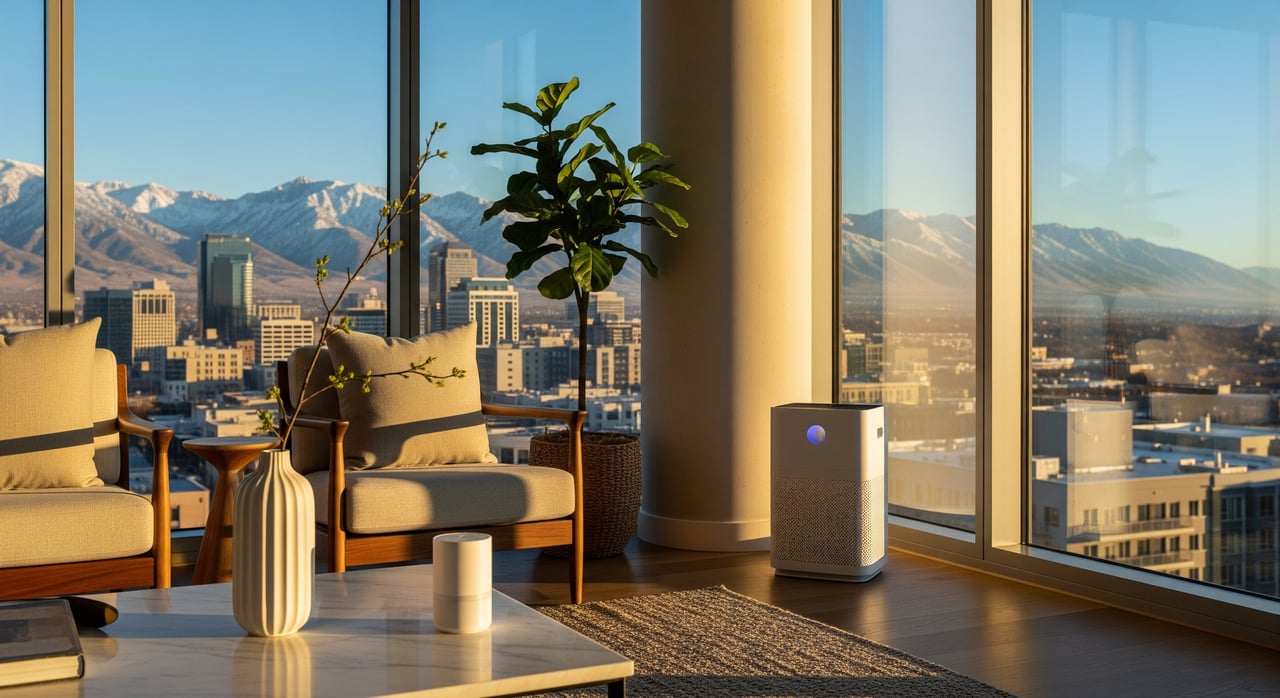
A compact smart monitor can track CO2, PM2.5, humidity, VOCs, and sometimes radon. Set reminders to swap filters, clean vents, and retest radon on a reasonable cadence. Use data trends to adjust ventilation and verify that mitigation stays effective.
HOAs, disclosures, and resale value
Working with your HOA or manager
If your test is elevated, share the report and request a clear path to approval. Multifamily measurement and mitigation standards give boards a trusted framework for building-wide solutions AARST standards. Utah law supports an owner’s right to install mitigation that meets industry standards, with reasonable design rules and proper licensing Utah HB0104.
Buying, selling, and STR implications
For sellers, recent test results and proof of mitigation can reduce objections and protect value. Utah’s real estate guidance encourages sharing results and using professional tests for transactions Utah DEQ transactions. For buyers and STR operators, clean reports and documented systems support insurance, guest confidence, and smoother underwriting. Larger lenders often expect multifamily testing that follows recognized standards Fannie Mae multifamily update.
Records, warranties, and vendor files
Keep a tidy file with test results, installer credentials, permits, warranty terms, and post-mitigation verification. This packet is valuable at resale and helps your manager maintain building health.
Next steps for SLC condo owners
- Order a short-term test for the lowest livable level of your unit or schedule a certified professional test Utah DEQ test guidance.
- If results are near or above action levels, notify your HOA and request the approval process and any building standards they use for mitigation.
- Obtain written proposals from certified mitigators that follow ANSI/AARST multifamily standards. Confirm post-install testing is included EPA standards overview.
- Retest to confirm performance, then monitor every two years or after major building changes EPA performance check.
If you want a local, concierge approach to testing, approvals, and resale planning, Amelia will help coordinate the steps with your HOA and trusted vendors. Let’s align your air quality plan with your ownership goals.
Looking for tailored guidance for your Park City or SLC condo? Reach out to Amelia Real Estate Co.. Let’s Chat.
FAQs
What is the EPA action level for radon?
- The EPA recommends fixing buildings at or above 4.0 pCi/L and considering action for 2 to 4 pCi/L based on your situation and goals EPA guidance.
Do upper-floor condos need radon tests?
- Yes. Radon can move through chases and shared spaces. Upper floors are not guaranteed safe without testing CDC overview.
How do I test a condo correctly?
- Test the lowest livable level, follow closed-house instructions, and consider a certified professional for transaction-grade results. Utah DEQ outlines steps and offers kits Utah DEQ testing.
Who pays for mitigation in a condo?
- It depends on governing documents and whether work affects common elements. Utah law protects an owner’s right to install compliant mitigation, with reasonable HOA rules allowed Utah HB0104.
What mitigation options work in multifamily buildings?
- Active sub-slab systems, sub-membrane systems, and ventilation upgrades are common. Designs should meet AARST multifamily standards EPA standards in practice.
How often should I retest after mitigation?
- Retest soon after installation, then every two years or after major renovations or HVAC changes EPA verification guidance.
Where can I find certified testers and mitigators in Utah?
- Utah DEQ lists certified professionals and offers program resources for owners and HOAs Utah DEQ radon program.