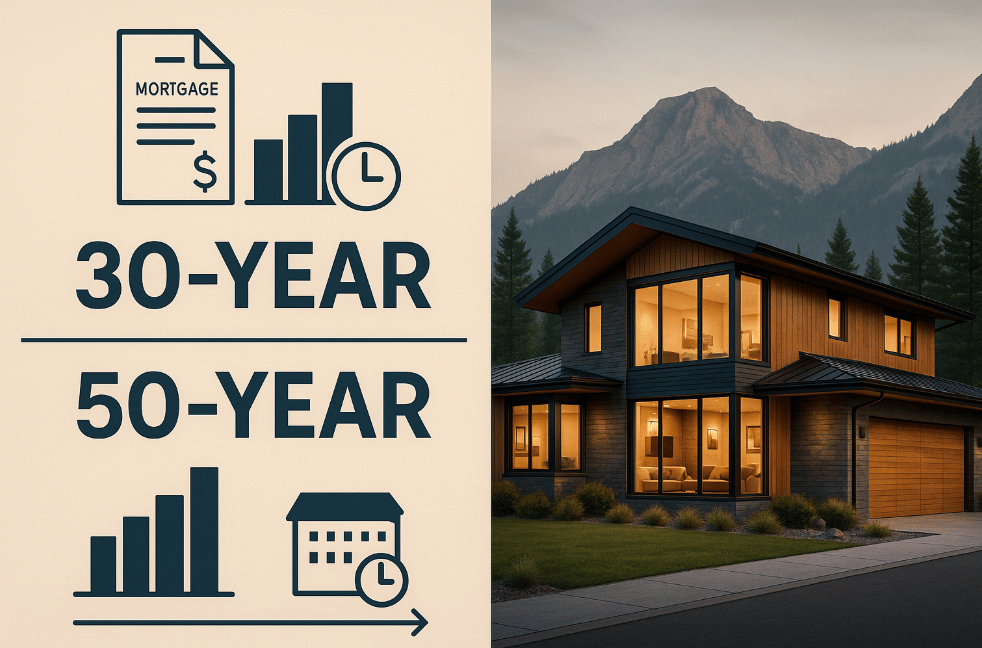
Are 50-year mortgages a smart long-term financing option, and how do they compare to the traditional 30-year mortgage?
A 50-year mortgage can reduce your monthly payment, but it also slows equity growth and increases total interest costs. Understanding how this long-term loan compares to a 30-year mortgage helps you make the most informed choice for your financial goals.
What a 50-Year Mortgage Actually Is
A 50-year mortgage is an extended-term home loan designed to spread payments over a much longer timeline, creating lower monthly payments than a 30-year mortgage. While this type of financing is not widely available in the U.S., it continues to gain attention as affordability challenges rise.
If you’re exploring long-term mortgage options for homebuyers, it’s helpful to understand how a 50-year structure works so you can compare today’s emerging products with traditional financing.
For neutral, foundational information on mortgage terminology and repayment structures, visit:
-
Consumer Financial Protection Bureau (CFPB): https://www.consumerfinance.gov/mortgages/
-
U.S. Department of Housing and Urban Development (HUD): https://www.hud.gov/topics/buying_a_home
50-Year Mortgage vs. 30-Year Mortgage: Key Differences
1. Monthly Payment Flexibility
A 50-year mortgage may offer noticeably lower monthly payments than a 30-year loan because the repayment period is stretched over two additional decades. For buyers sensitive to monthly cash flow, this can create more flexibility in the budget.
2. Total Interest Over Time
The tradeoff? A significantly higher total interest cost over the life of the loan. Extending the term reduces the monthly payment but increases the amount paid overall.
For general guidance on how interest accumulation works, see:
-
Federal Housing Finance Agency (FHFA): https://www.fhfa.gov/Homeownersbuyer/MortgageBasics
3. Slower Equity Growth
Because payments are stretched thin across 50 years, you build home equity more slowly compared to a 30-year mortgage. If you eventually plan to refinance, leverage equity, or sell, this timeline matters.
4. Long-Term Financial Strategy
A 50-year term may fit scenarios where:
-
You’re prioritizing monthly affordability
-
You want to redirect cash flow toward other investments
-
You’re planning to refinance into a shorter term later (market allowing)
A 30-year mortgage, however, continues to be the standard because it balances affordability with manageable long-term interest.

When a 50-Year Mortgage Might Make Sense
A longer-term loan could align with your goals if you value flexibility in the early years of homeownership. It may also appeal to buyers who anticipate:
-
Long-term property ownership
-
Income growth over time
-
A desire to reduce upfront financial pressure
Still, it’s crucial to consider how this aligns with your broader financial picture. Every buyer’s situation has different needs — especially in dynamic markets like Bozeman and Big Sky, Montana, or Park City, Utah, where lifestyle decisions and property types vary widely.
Final Takeaway
A 50-year mortgage is an emerging idea that offers lower monthly payments but increases long-term costs. It’s not yet a mainstream financing option, but it’s gaining attention as affordability challenges continue. When comparing 50-year mortgage vs. 30-year mortgage options, the right choice depends on how you balance payment flexibility, long-term equity, and your future plans. Understanding the pros and cons now can help you make a more confident move later.
Ready to Talk Through Your Options?
If you’re weighing long-term financing scenarios or trying to understand whether a 50-year mortgage could support your buying strategy, call me to discuss financing and next steps.
Amelia Turbyfill
Real Estate Agent — Bozeman & Big Sky, Montana | Park City, Utah